
District Parish Council
About No Man’s Heath and District
No Man’s Heath and District is a predominantly rural parish in South Cheshire, situated near the historic market town of Malpas. The area is traversed by the A41, linking London and Birkenhead, and includes an 8km stretch of the popular Sandstone Trail.
The parish encompasses the settlements of Bickley, Edge, Hampton, Larkton and No Man’s Heath. It was formed in May 2007 through the amalgamation of the former civil parishes of Bickley, Hampton, Edge and Larkton.
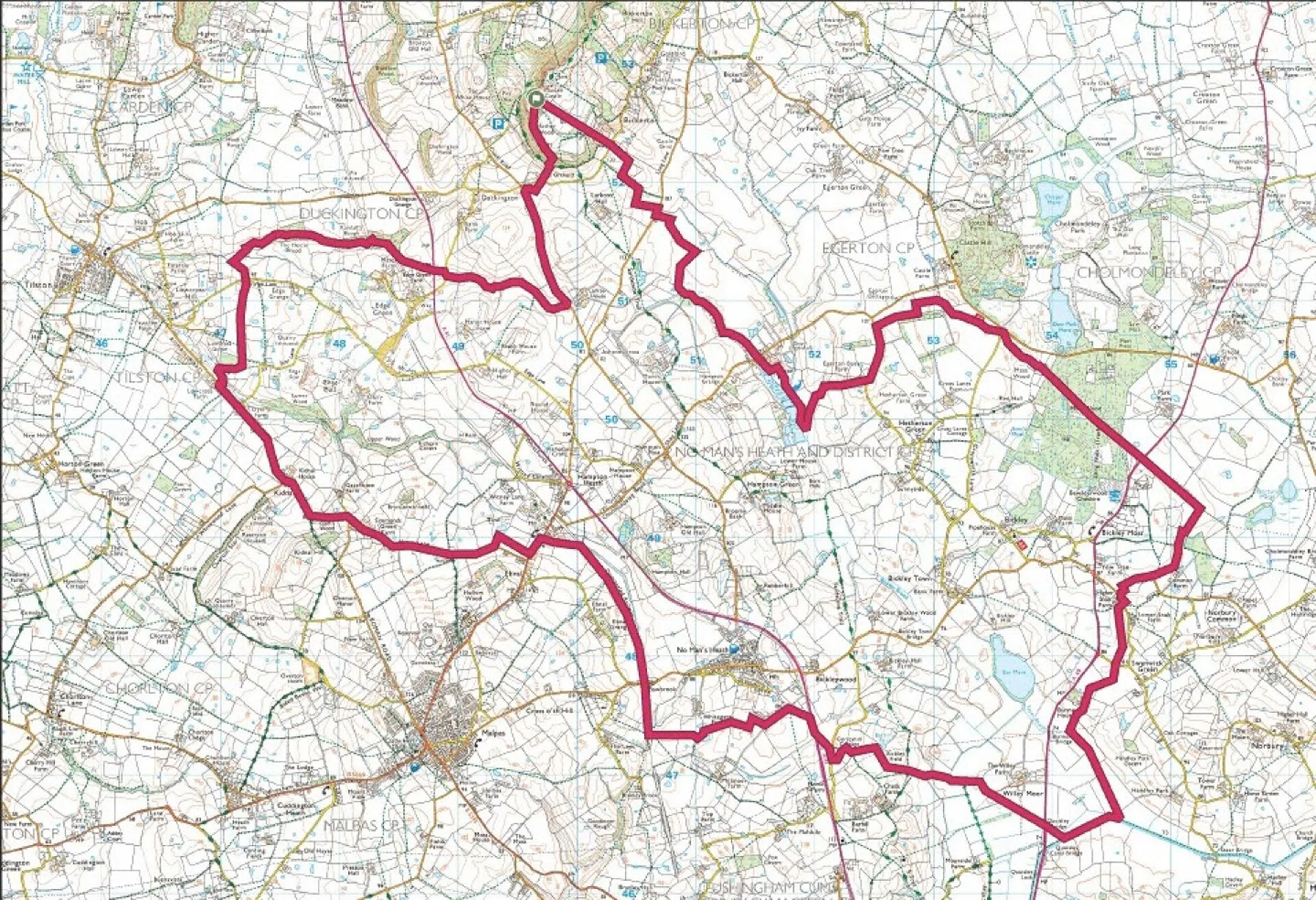
Covering approximately 2,313 hectares (5,712 acres), the parish had a population of 1,132 and 459 residential properties, according to the 2011 Census.
Despite its rural character, the area has a variety of local amenities and businesses, including farms, shops, a Post Office, a veterinary practice, restaurants, equestrian facilities, cottage industries and a small industrial estate in Hampton.
Each settlement has its own distinctive history and heritage, contributing to the character and identity of this part of rural Cheshire.
Bickley
The name Bickley is thought to have Anglo-Saxon origins, possibly relating to bees. This rural area of the parish extends across the A41 and A49 and encompasses Bickley Wood, Bickley Town and Bickley Moss.
Known for its attractive countryside, distinctive landscapes and historic buildings, Bickley is home to the Grade II listed St Wenefrede’s Church. Built in 1892 for the 4th Marquess of Cholmondeley, the church is constructed of sandstone and was designed by the architectural practice Douglas and Fordham, led by John Douglas.
The area’s rural character and historic features contribute to the rich heritage of No Man’s Heath and District.
Edge
Edge is a picturesque rural area characterised by its open countryside, farmsteads, residential properties and a small number of local businesses. It retains a distinctly rural character, with a landscape shaped by its agricultural heritage.
One of the area’s most notable historic buildings is Edge Hall, a Grade II* listed property dating from the early 17th century. The hall is recognised for its Jacobean origins, with additions and alterations made from the early 18th century onwards. It remains an important part of the area’s architectural and historic heritage.
Larkton
The name Larkton is thought to derive from an Old English word associated with a farm or settlement. This quiet, sparsely populated rural area lies beneath the distinctive landscape of Bickerton Hill, cared for by the National Trust, and is characterised by open countryside, scattered farmsteads and a small number of homes.
Larkton offers opportunities to enjoy the surrounding countryside, with part of the renowned Sandstone Trail passing through the area. A network of local walks also provides access to Maiden Castle, a Scheduled Monument situated near the northern boundary of the parish, adding to the area’s historic interest and rural appeal.
No Man’s Heath
The name No Man’s Heath was first recorded in the late 15th century as Nomonheath, before gradually evolving into its present form. It is thought to reflect the area’s historical association with common land, where local people may have enjoyed rights to graze livestock and collect wood or turf for fuel.
Today, No Man’s Heath is a predominantly residential village with a local Premier shop and Post Office, alongside a number of rural businesses and enterprises.
The village also has a distinctive connection to the 17th-century traveller Celia Fiennes. A memorial on Back Lane commemorates her travels through England, including her memorable and reportedly intimidating experience while passing through No Man’s Heath. This unusual link adds another fascinating dimension to the village’s local history and heritage.
Hampton
Hampton is a varied rural area combining residential properties, open countryside and farmsteads with a range of local businesses. These include equestrian establishments, a veterinary practice, a restaurant and a small industrial estate, reflecting the area’s mix of rural life and local enterprise.
The parish is also enjoyed by walkers, with the Sandstone Trail passing through its picturesque countryside. The route runs past Manor House Stables and Hampton Green before following the eastern boundary of the parish, offering an opportunity to appreciate the area’s landscapes and rural character.
Defibrillators
The parish contains four public defibrillators which are located at the public telephone box at Hampton, the Post Office in No Man’s Heath, Coronation Hall at Bickley, and D Wise Ltd at No Man’s Heath.
No Man's Heath and District Parish Council
Stay informed and have your say on local matters.
View parish updates, upcoming meetings, and ways to get involved in your community.